


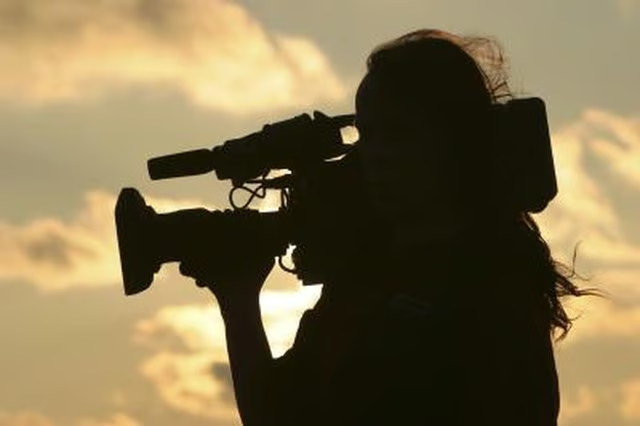
A cameraman, or the more gender-neutral camera operator, works in the production of television shows, movies, music videos or in the broadcasting of news and sporting events. Some work for television stations, others work for production companies or studios. Others work independently and take on freelance work for a variety of employers.
Setup
The camera work involved a broadcast or film is essentially related to the quality of the production. Camera operators typically play an active role in the positioning of equipment and planning for shots. Practicing the camera operation with staging and movements and adjusting equipment as needed to capture the shot in the way a director desires is also necessary for large productions. The level of influence the camera operator has in pre-production varies, depending on experience and the openness of the director in accepting input.
Operation
A central role of the camera operator is to capture live footage in a broadcast or to role film in a TV or motion picture production. In a large production, other equipment, including dollies, cranes and stages are needed. The operator sets the placement of these items prior to production and directs their movement in the process of filming. In some cases, they operate a camera manually on their shoulder so they can easily move around and get a close up shot if necessary.
Directing Staff
While camera operators typically follow a director's orders, they also normally have staff that assist in the filming or broadcasting process. Production assistants commonly help operators move equipment and adjust lighting during the course of filming. Some shots require adjustments during the middle of filming or production. Additionally, operators often collaborate with lighting directors and stage crew to ensure the camera follows the on-screen movement of actors and the lighting shows well on camera.
Background Requirements
Though independent operators may find freelance work without a formal education, many employers require a bachelor's degree in a field like broadcasting or production. Many who want to get into this field take classes in camera operation and film editing. Additionally, camera operators often start as interns or production assistants with studios or broadcasting companies. Technical camera skills, creativity, visual awareness, detail-orientation and excellent hand-eye coordination are also commonly needed.
