


There's a lot to like about a career helping others as an LPN or licensed practical nurse. Also called a licensed vocational nurse or LVN, an LPN needs only one year of training. Practicing LPNs averaged an annual salary of $42,040 as of 2011, according to the U.S. Bureau of Labor Statistics, while 10 percent exceed $57,000 annually. However, the LPN career track has its disadvantages.
Education
Although relatively short, the academic road to your LPN can be rocky. Admissions are competitive for LPN training, which is available in technical schools, hospitals and colleges. Many programs require the National League for Nursing Pre-Admissions Examination, or PAX-PN. This three-hour test covers difficult topics such as vocabulary, algebra, geometry, chemistry, physics and biology. Once a student, you'll take challenging classes in anatomy, physiology, psychology, pharmacology and biology, plus you have to demonstrate your know-how in clinical settings under the eagle eyes of experienced nurses.
Testing and Licensing
You don't become an LPN the minute you complete your last class. Your true final exam is the National Council Licensure Examination, which all states require you to pass to get a license. The NCLEX-PN is a comprehensive computer-based test lasting five hours and is available at Pearson Testing Centers nationwide. It varies from 85 to 205 items, so some unlucky applicants get a lot more questions than others. As of 2013, the test cost $200 and doesn't include state licensing fees.
Physical Demands
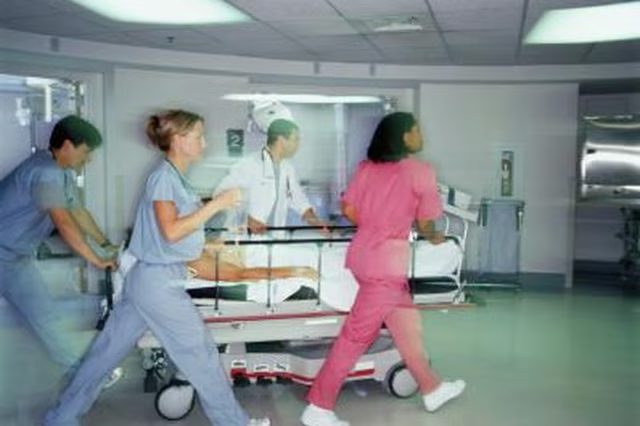
Once you start working as an LPN, you'll need to be strong as an ox. Lifting and moving patients are hard on your back, and updating charts and computer records stresses your neck and eyes. You'll often have to work nights, holidays and weekends because hospitals and nursing facilities are always open. Many nurses work more than a 40-hour week, and shifts are often 10 or 12 hours. If other nurses call in sick, you may have to pick up the slack and work a double shift. Even though you need a bed yourself, you'll have to stand and care for patients.
Emotional Stress
Practical nurses need the patience of Job. They have to keep their professional cool with sick people who lash out and vent frustrations. They must show compassion toward patients who are confused. They deal daily with the emotional impact of seeing sickness and death close up. Although LPNs have supervision, they must work accurately and make good decisions in time of emergency. A wrong medication dose or poor judgment could hurt a patient or cause premature death. The need to be Miss Perfect makes the job even more stressful.
Status
An LPN is low in the pecking order in hospitals, doctors' offices and nursing facilities. Doctors and registered nurses supervise their work and boss them around. In some states, LPNs aren't permitted to begin intravenous drips or give patients drugs, which keeps their hands tied, because they're allowed to perform some nursing duties only under orders from a doctor or registered nurse.
