
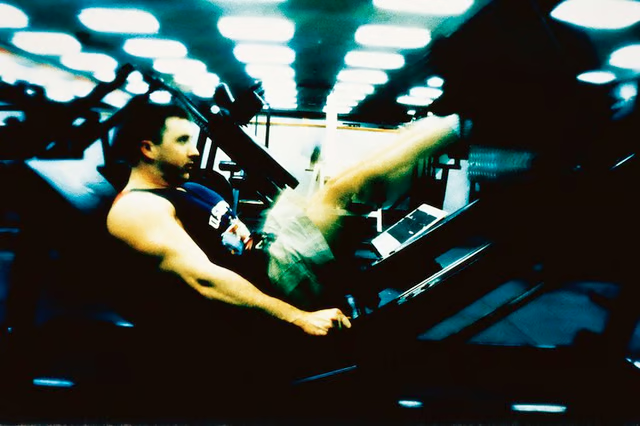
Among the newest leg press options available in fitness gyms is the vertical leg press unit, which requires you to push a weighted platform straight up while lying on your back. It’s slightly different from the more commonly-seen seated leg press and 45-degree leg press units, though all three types of leg presses require the same joint movements and effectively develop the major muscles in the lower body.
Vertical Leg Press
The vertical leg press invovles lying on your back with your hips on the back pad, legs sticking up vertically and your feet aligned underneath the unit’s platform. Place the balls of your feet securely against the platform. Once you’re ready, pull out the pins to unlock the platform so that the weight is now on your legs. Lower the platform down by slowly bending your knees and bringing your thighs towards your chest. Once your knees are bent slightly beyond 90 degrees, extend your legs to return the platform back up to starting position.
Seated Leg Press
Another common leg press machine available at most gyms is the seated leg press. As suggested by its name, it’s performed while in a seated position. Sit in the machine with your back firmly placed against the back support. Position your feet on the platform that’s straight ahead of you and grip the handles that are on either side of your hips. Extend your legs to push the platform away from you. Once your legs are fully extended, control the platform back to starting position by slowly bending your knees.
45-Degree Leg Press
Instead of lying on your back or sitting straight up, you’re in a reclined position when performing the 45-degree leg press. The platform is elevated in front of you. Place your feet on the platform and extend your legs to push the platform away from you. Control the platform back down to finish one repetition.
Muscles
The vertical leg press, seated leg press and 45-degree leg press all require the same joint movements of hip extension, knee extension and ankle extension. Therefore, all three develop the same collection of muscle groups. According to the American Council on Exercise, leg presses primarily develop the gluteus maximus, or the buttocks, but also requires assistance from the quadriceps, hamstrings, and gastrocnemius. The gluteus maximus and hamstrings work to extend your hip joint. The quadriceps extends your knee joints and the gastrocnemius extends your ankles.
Considerations
Because of the positioning of the vertical leg press unit and gravity’s pull on the weighted plates, it’s likely you will complete the exercise with less added weight than when performing the seated leg press or 45-degree leg press.
