
You are compassionate and a great critical-thinker -- key skills needed to become an audiologist. And with the U.S. Bureau of Labor Statistics projecting that jobs for audiologists will increase by 37 percent through 2020, it's a field full of opportunity. Audiologists are responsible for examining and treating patients with hearing and balance problems. But to practice you'll need a doctorate degree in audiology. After taking an exam and becoming licensed in your state, there are plenty of career options available including working in hospitals, audiology clinics and physician offices.
Audiometers
Audiologists use a machine called an audiometer to measure a patient's hearing. The audiometer's headphones are placed over the patient's ears and play a series of tones. Audiologist control the volume of the tones by increasing and lowering the volume. When the patient hears the tones, they signal by either pressing a button or raising their hand. The audiometer helps measure any hearing loss.
Hearing Aids
For patients with hearing problems, an audiologist may recommend hearing aids. They discuss the variety of hearing aids in different shapes, colors and sizes with patients based on the level of hearing loss and lifestyle. There are hearing aids that can be used behind a patient's ear or inside the ear canal. Audiologists also teach patients how to care for and maintain hearing aids.
Otoscopes
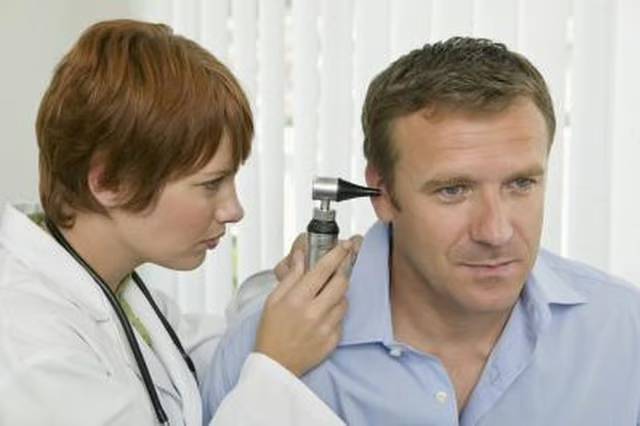
An otoscope is a device used by an audiologist during an ear exam. During the exam, the audiologist may move the patient's ear back or forward to straighten the ear canal, placing the tip of the otoscope into the patient's ear. There is a light beam that shines through the device used to examine the ear canal. This allows the audiologist to find out if the patient has an ear infection or disorder.
Cochlear Implants
Audiologists can treat patients with hearing loss with cochlear implants. These tiny electronic devices help to provide sound for deaf and hard-of-hearing patients. During an operation, an audiologist places the implants under the skin near the ear. These devices consist of a microphone and speech processor to effectively help the patient hear sounds in the environment and understand speech.
