


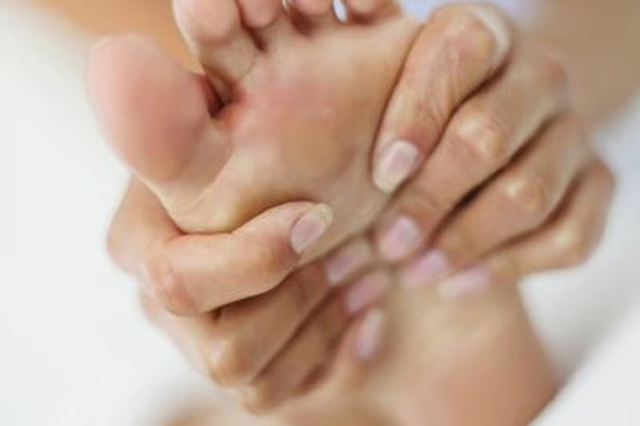
If you’ve ever woken in the middle of the night with your foot knotted and in spasms, you were the victim of a muscle cramp. Consider yourself lucky that you were bed and not in the middle of an Olympic race for the gold. Swimmers often get cramps in their calves and the arches of their feet. Several factors may cause cramps in your feet. If you’re fit and warmed up, then the cramps are probably due to a lack of electrolytes, such as sodium and potassium, and fluids. When you’re hydrated, your muscles will get enough oxygen. If you’re dehydrated, your muscles may not get enough oxygen and will tighten and spasm.
Step 1
Consume a sports drink filled with electrolytes or at least a glass or two of water before you begin exercising. Hydrate again after you’re done exercising.
Step 2
Eat one banana daily to boost your intake of potassium, an electrolyte required for exercise. Also add foods containing magnesium and calcium, such as leafy vegetables and dairy products, to your diet.
Step 3
Warm up your feet before exercising. Point and flex your feet several times. Perform ankle circles while raising and lowering your toes. Stand by a doorway, placing your hand on the doorjamb for support. Raise your body on to your toes several times to heat up the muscles in your arches.
Step 4
Stretch your feet after a warm up. Flex your ankles. Grab the balls of your feet and slowly pull the tops of your feet toward you until you feel the stretch in your arches.
Step 5
Stop the exercise and stretch the muscle carefully to prevent the cramping from getting worse or returning.
Step 6
Massage the affected arch of your foot. Knead the muscle as it’s a lump of dough. Aim to relax the muscles and calm the spasms.
Step 7
Apply steady pressure to the cramped area with your fingers or the heel of your hand.
