
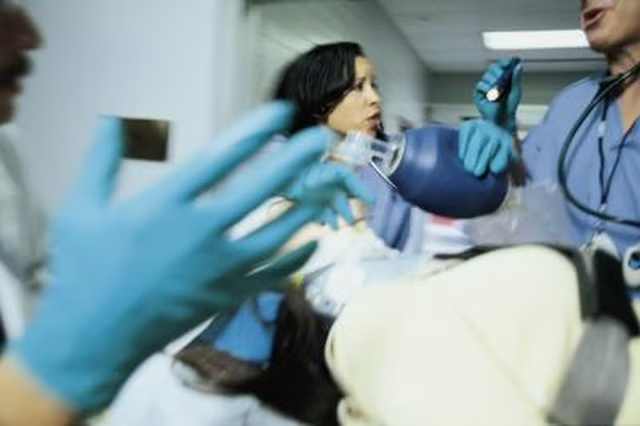
In a single shift, an emergency room nurse might care for an elderly woman with Alzheimer’s disease who has broken a hip, a small child with a severe asthma attack or a teenager with a broken arm. Although it is uncommon, an emergency room also might be completely empty for an hour or two. However, the calm can be shattered by the simultaneous arrival of several ambulances bringing in victims from a multi-car accident. ER nurses must have the skills to deal with all these situations.
Crisis Situations
Patients who come to an emergency room may be in life-or-death situations. The ER nurse must be able to make an immediate assessment of critical conditions such as a heart attack, gunshot wound or ruptured aneurysm. She must be able to move quickly but still take time to reassure the frightened patient. Resuscitation scenes can be extremely chaotic; an ER nurse must be able to remain calm and focused despite turmoil and noise around her.
Flexibility
Flexibility is a key skill for an ER nurse. Patients’ needs can change quickly and the nurse must be able to respond immediately to those changes. The ER nurse may need to accompany a ventilator patient to X-ray, then come back and change a baby’s diaper or start an intravenous line on an older woman with fragile veins. The mix of patients in the ER can also change from minute to minute. The nurse must keep all the changes straight to prevent medication errors and other problems.
Clinical Skills
ER nurses need excellent clinical skills. They must perform their duties swiftly and efficiently to prevent delays in care. The ER nurse should have the technical skills to perform treatments and therapies, manage complex machinery and immediately recognize important changes in a patient’s condition. Patient assessment is another vitally important skill for ER nurses. ER nurses must know how to interpret lab and other diagnostic information in relation to the patient’s condition and the plan of care.
Interpersonal Skills
The emergency room is a place where people who are frightened or in pain need comfort and support. ER nurses need excellent interpersonal skills to calm patients, deal with an agitated family member or communicate with people who may not speak much, if any, English. An ER nurse should understand the basic principles of good customer service, but also must be able to stand her ground with an aggressive patient or family member. A sense of humor is also helpful.
Stamina
Physical stamina is a useful quality for an ER nurse. A confused patient may need to be physically restrained by the nurse until he can be sedated. Many nursing tasks require the nurse to bend, stoop, crouch or stand in uncomfortable positions for a long time. ER nurses must also spend much of their working day on their feet, and they lift patients from gurneys to beds, or they must move heavy equipment. An ER nurse who is in good physical condition is less likely to suffer a work-related injury or to become exhausted by the end of the shift.
