


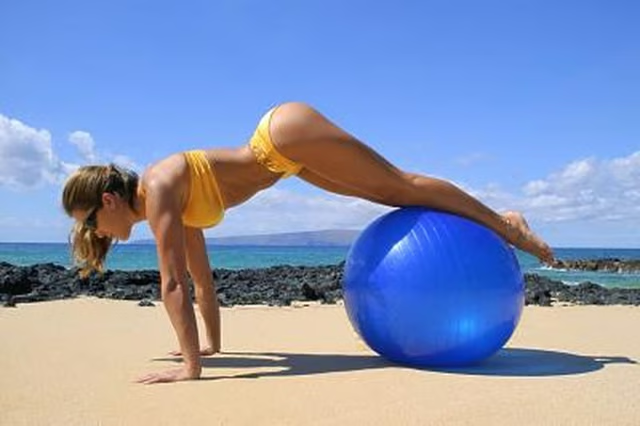
If you think back to the first time you did stability ball pike handstands, you might remember just about every muscle in your body being sore the next day. That’s because this exercise targets major muscle groups from your arms and shoulders to your hips and thighs. This multipurpose exercise is not for everyone, however. Because of the difficulty of maintaining proper form, you risk injury if you are not strong enough to do it correctly.
Description
Getting into the starting position for this challenging exercise takes some finesse. Stand in front of your stability ball and lean over it so your stomach rests on the ball. Roll forward until you can place your hands on the floor. Then, walk your hands away from the ball until you are in a plank position, with your shoulders over your hands and your shins on top of the ball. For this starting position, engage your abdominal muscles to lift your hips into the air. Keep your elbows, back and legs straight. Roll your feet toward your hands as far as you can. Then, roll back to the starting position.
Arms and Shoulders
While the stability ball helps support some of your body weight, a good deal of it rests on your hands. This requires you to work several muscles in your arms and shoulders. Also, as you pike your body by lifting your hips, the angle of your shoulder joint changes. This movement targets additional muscles. In this exercise, your triceps keep your elbows straight and your shoulders stabilized, and your serratus anterior helps stabilize your body in the plank position. Your latissimus dorsi, deltoids, trapezius and rhomboids produce the movement at the shoulder joint.
Lower Body
Keeping your lower body stable throughout the pike requires work from different muscles in your lower body. Your quadriceps contract to maintain a straight-leg position, and your adductors work to keep your legs together so they don’t roll off the sides of the ball. As you roll back to the starting position, your gluteus maximus extends your hips.
Abdominal Muscles
While the stability ball pike targets muscles in the upper and lower body, its primary target is the abdominal muscles. This exercise works your rectus abdominis, transverse abdominis and obliques. In fact, the stability ball pike is one of the most effective exercises for these important abdominal muscles. By strengthening these muscles, you protect your back from injury and make your movements -- in day-to-day activities as well as sports -- more efficient.
