


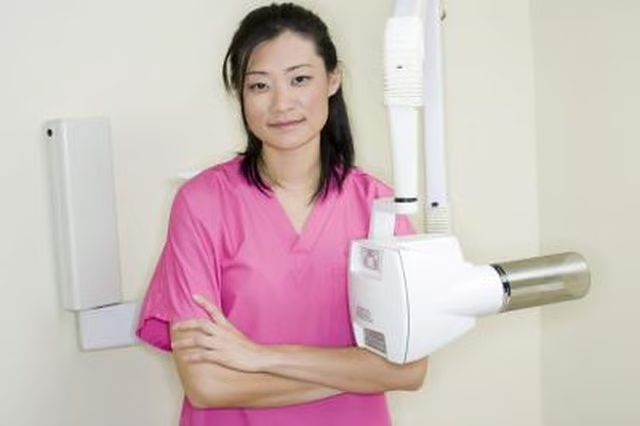
Hygiene assistants support hygienists in dental practices. The role is similar to a dental assistant with many of the same responsibilities, except your focus is on hygiene care and treatments. Some practices allow their assistants to work with both dentists and hygienists; others have separate assistants for each function.
Overview
Hygienists work alongside dentists in most practices, promoting oral health and administering certain types of treatments. Although it is common for dental assistants to work with dentists, the concept of employing dedicated hygiene assistants to work with hygienists is relatively new. Many practices find that a hygiene assistant reduces workload, frees up time for more appointment slots and improves patient service. The job may suit dental assistants looking for a change, or people studying to become hygienists who want on-the-job experience.
Responsibilities
Your role is to support one or more hygienists. This involves working alongside them and making sure they have all the necessary equipment. You'll also set up, clear away and clean equipment between patient consults, and fill in record and chart data. In some jobs, you may also take on minor tasks, such as taking blood pressure, applying fluoride treatments, polishing teeth and developing X-rays. The job requires a lot of contact with patients; you'll greet and settle them in and, in some cases, book future appointments when they leave.
Qualifications
Some, but not all, practices require certification in dental assisting. You may have to take a licensing exam, although this depends on the state in which you live. Some states also require licensing for individual treatments, such as radiography. You'll need at least a high school diploma or equivalent, and, if a job doesn't require certification at the application stage, the practice may expect you to go through the process once you start work.
Skills
You'll spend most of your day working with other people, so good communication skills are essential. You may be the first person a patient meets in the practice, and you need to make a good impression. You may also deal with nervous or difficult patients. The job also requires good organizational skills, and the ability to multi-task and adhere to a schedule. Practical skills and technical aptitude are vital, as you're likely to work with a variety of equipment, machinery and computer software programs.
