


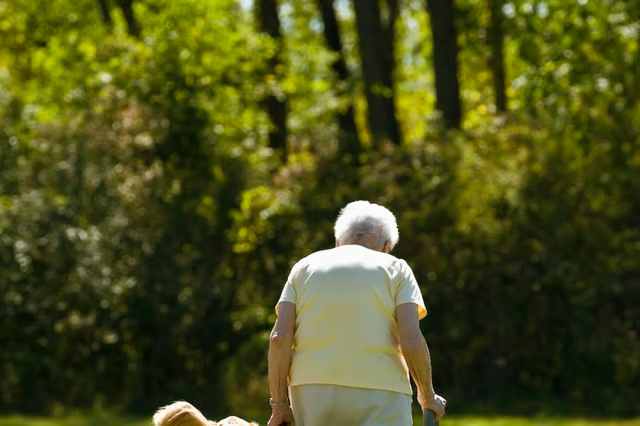
As you grow older, you lose muscle mass and bone density, and you may find it difficult to maintain stamina performing simple activities. Fortunately, even a small amount of exercise can increase your stamina and help you perform daily tasks such as walking up stairs, going food shopping and performing household chores. A study performed by the Sinai School of Medicine argues that exercise for older adults results in improved stamina and endurance, as well as decreased depressive symptoms, increased mobility and a decreased risk of heart disease and diabetes.
Start slowly if you are new to exercise. Try increasing the amount of time spent moving your body around the house. For example, walk up the stairs more frequently, do more demanding household chores or lift heavier objects in your house.
Perform cardiovascular activities regularly. Find an activity that raises your heart rate that you can perform at least 30 minutes per day, five days a week. That's 150 minutes of cardiovascular activity per week, as recommended by the Centers for Disease Control and Prevention. Some examples of cardio activities include walking, light jogging, riding a stationary bicycle and working on the elliptical machine.
Add two days of strength training to your weekly exercise routine. According to "Growing Stronger" by the Centers for Disease Control and Prevention, strength training is one of the best ways to keep your muscles healthy. Healthy, strong muscles will help you to exercise longer, increasing your stamina. For example, strengthen your biceps with bicep curls by holding a can of vegetables in each hand. Tuck your elbows in to your sides. Bend both elbows and curl your hands to meet your shoulders. Lower your hands back to your sides and repeat the exercise until your arm muscles are fatigued.
Stretch your muscles regularly to combat muscle tightening. With disuse, your muscle fibers shrink and become shorter, cause you to lose flexibility and decreasing your range of motion. Before and after each exercise session, aim to stretch all your major muscle groups at least five minutes. For example, stretch your calf muscles using a wall. Stand two feet from a wall and place your palms on the wall, fingers facing upward. Step the right foot forward so your toes touch the wall. Bend your elbows and lower your chin toward the wall, feeling the stretch in the calf. If you do not feel a stretch, walk your back foot further back.
