


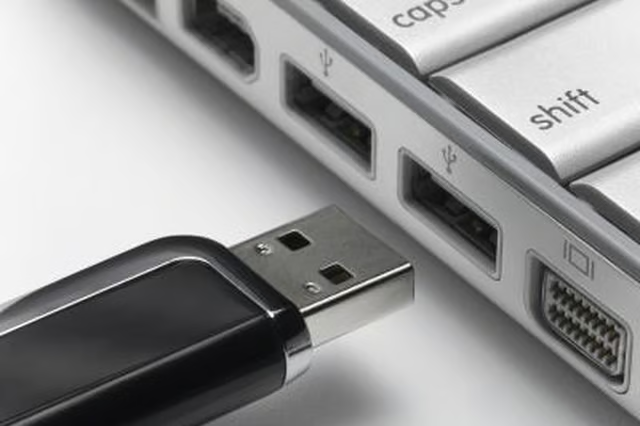
JumpDrive and ThumbDrive are brand names of universal serial bus, or USB, flash drives ... convenient little devices capable of storing large quantities of data. With multi-gigabyte capacities, USB drives can potentially hold hours of video, days of audio, millions of pages of documents, or complicated executable programs. The combination of vast storage and small physical size can make them problematic in the workplace.
Loss of Secure Data
Many employees use flash drives, also called memory sticks, to take information back and forth from their work computer to their home computer. After all, flash drives make it easy to work at home. However, if you lose the flash drive or it's stolen from you, all of the information on it will be available to the person who steals it. Loss and theft of USB flash drives is a real risk -- more than 9,000 flash drives got left behind in pants pockets in Britain in 2008. And in Oregon, a single stolen flash drive compromised the private health data of more than 14,000 people.
Theft of Data
Flash drives also make it easy for an employee to steal data from her employer. All that a worker with bad intent needs to do is plug a flash drive into her computer, copy gigabytes of company data and walk out the door. Given that just about every computer has a USB port and the drives are easy to conceal, this behavior can be hard to police.
Unauthorized Computer Use
Many companies have policies preventing employees from viewing adult material, listening to music or watching video on workplace computers. These companies may even install special firewalls -- security programs that control Internet access -- that prevent employees from downloading the content over the company's network. All of those restrictions fail when an employee puts inappropriate data on a flash drive and plugs it into a work computer.
Malware and Viruses
Many computers can boot off of a specially-formatted flash drive. This means that an employee could, if she wanted, boot up her work computer from a USB drive and bypass all of the security software installed on the computer. Or, an employee could bring in a flash drive that is infected with a virus, plug it into a computer at work and inadvertently infect the entire company's network.
