


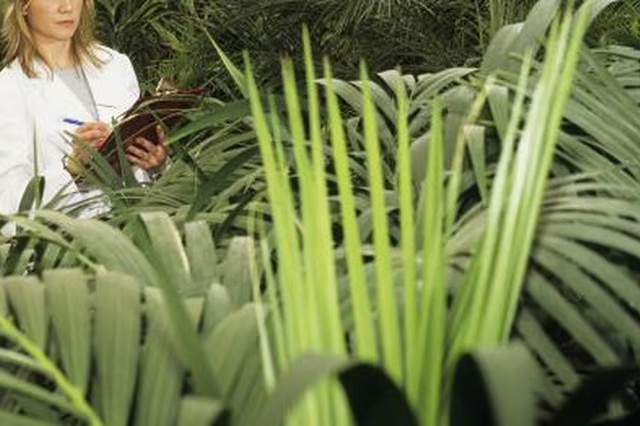
Ethnobotany is a hybrid academic discipline that focuses on how people of specific cultures and regions use indigenous plants. Ethnobotanists study how people use their native plants for food, medicine, clothing, shelter, hunting activities and religious ceremonies. The nature of their work makes ethnobotanists a cross between anthropologists and botanists, with a little ecologist and sometimes, linguist in the mix. They are also typically knowledgeable in the field of pharmacognosy -- the study of medicines and poisons derived from plants.
Education and Training
As ethnobotanists study the relationship between plants and people, they generally have a background in both anthropology and botany. Up until the late 1990s, the path of study for an ethnobotanist was typically an undergraduate degree in biology or botany followed by graduate work in anthropology, sociology or ethnic studies. But then a few academic institutions began to establish formal degree programs in ethnobotany, which is a trend that continues into the 21st century. However, individuals with educational backgrounds in biochemistry, pharmacy and medicine who decide to make a career change might also end up in ethnobotany or ethnopharmacology.
Ethnobotanical Fieldwork
Fieldwork is the cornerstone of an ethnobotanist's job. Fieldwork means traveling to remote areas around the world to live with the indigenous people and collect plant specimens and plant lore. Fieldwork in itself is challenging, as it requires linguistic skills and great cultural sensitivity to convince people to share their knowledge. However, the ethnobotanist must also do extensive research and secure the necessary legal permissions prior to his actual fieldwork.
Preventing the Loss of Plant Knowledge
One of the primary responsibilities of an ethnobotanist is to prevent the loss of plant knowledge. The plant lore of indigenous peoples is an invaluable resource in great danger of being irretrievably lost in many locations around the world. Some of these plants contain pharmacologically active compounds that could result in new medicines. Ethnobotanists have an ethical duty to ensure that the plant specimens and plant lore they collect during their fieldwork are cataloged and published, and, therefore, available for the use of future generations of scientists.
Teaching
Although not all ethnobotanists work for academic institutions, most do, and they typically have teaching responsibilities when they are not away doing fieldwork. In most cases, teaching responsibilities include teaching at least one or two classes as well as acting as an adviser for a few grad students.
