


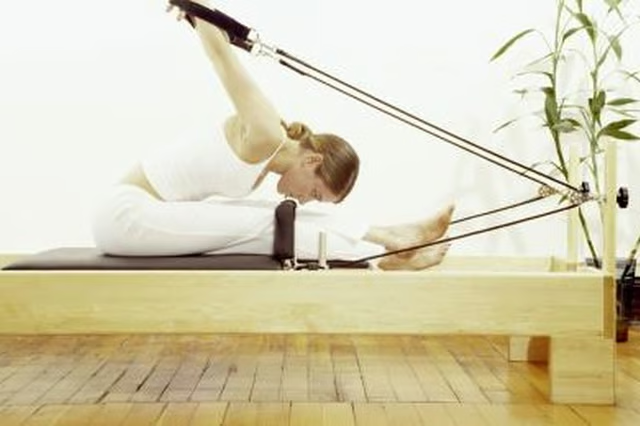
You would think that the whole point of putting your body in uncomfortable, compromising positions and forcing yourself to sweat like a racehorse is so you won't look like an elephant. According to many Pilates instructors, however, folding over and making your entire torso and upper body look like an elephant trunk is just the trick to flatten that tummy and tighten that core. So, no more wise cracks that make reference to the mighty elephant. After all, your zoo friends were trying to teach you something all along.
Step 1
Stand on the Reformer with your head facing the foot bar and your heels against the shoulder pads.
Step 2
Bend forward slowly and grab the foot bar with your hands. Keep your elbows straight and turn them outward toward the sides of your body. Don't move your feet and keep your legs as straight as possible. Keep your hands shoulder-width apart and maintain a straight back.
Step 3
Make the elephant trunk pose. Tilt your hips up toward the ceiling. Pull in your navel. Do not move your hands or feet. Exhale as you hinge your entire upper body upward at the hips to elongate the spine. Extend your arms forward from the shoulder blades. Tuck in your chin toward your chest.
Step 4
Make sure your abdominal muscles are engaged to prevent an arch in your back. Your upper body will take on the form of an elephant trunk as it maintains a straight line from the hips straight down to the wrists.
Step 5
Slide the feet backward on the Reformer's sliding carriage. Do not move the upper body. Slide back as far as your legs allow. Lift your head up to face the foot bar as your body extends backward.
Step 6
Exhale slowly. Tuck your chin back in toward your chest. Tuck your buttocks in and down. Complete the exhale as you resist the resistance springs on the Reformer's sliding carriage. Slide in slowly to engage the lower abdominal muscles. Lift your head as you slide up. Roll up until your shoulders are completely parallel to the foot bar you are holding.
Step 7
Inhale. Take on the form of an elephant trunk again. Do not remove your hands from the handle. Don't move or slide your feet. Exhale and tilt your hips upward toward the ceiling. Pull in your navel. Hinge your entire upper body upward at the hips to elongate the spine. Extend your arms forward from the shoulder blades. Tuck your chin into your chest.
Step 8
Do a total of five to eight repetitions.
