


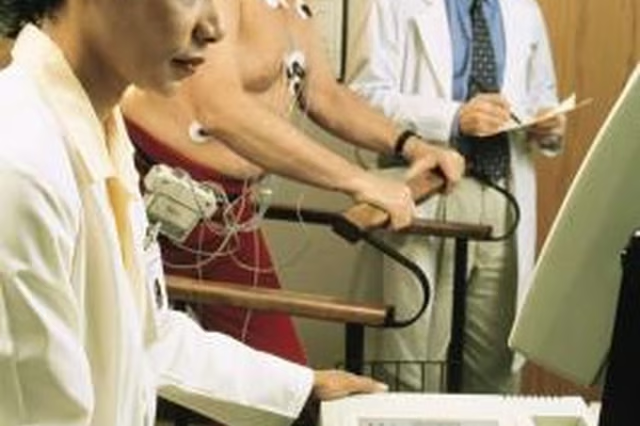
Your job as an electrocardiogram technician is to run EKG tests on patients to monitor cardiovascular activity. As well as performing EKGs, you may train in related procedures, such as stress tests and Holter monitoring. There are a couple of ways to train as an EKG tech, and you may have the chance to work as an intern as part of your training.
Learning on the Job
The minimum education you need to become an EKG technician is a high school or GED diploma. Employers commonly train techs in-house, so this role doesn't often require formal training in school or college. According to the Bureau of Labor Statistics, learning the basics of the job takes up to six weeks, although it will take you longer to learn how to administer more complex exams, such as stress tests and Holter monitoring.
Studying for a Certificate or Degree
If you prefer, you can go to college to study for a certificate or degree before you find a job as an EKG tech. Some techs take the certificate route and study for up to one year in vocational schools or community colleges. You can also enroll in an associate degree program, which typically lasts for two years. Some EKG techs have bachelor's degrees, although you don't need to study for four years to work in this job.
Certificate and Degree Program Contents
Certificate programs and associate degrees typically focus on teaching EKG-specific classes. At a basic level, you’ll learn how EKGs work and how to administer them. Most courses also introduce you to medical terminology and cardiovascular anatomy and teach you how to deal with patients. You're also likely to get an introduction to ethics, medical law, and CPR and first aid. If you take an associate degree, you may be able to combine EKG training with another discipline, such as phlebotomy.
EKG Technician Internships
Many college programs include internship periods. Internships are typically unpaid, but you’ll gain valuable experience in a clinical setting so you can see what the job is really like. Length of internships may vary depending on your program, but you're looking at approximately 40 to 60 hours. If your program doesn't include an internship, it may be worth organizing your own as a volunteer or job shadow.
EKG Certification
You don't need certification to work as an EKG technician, but it’s worth doing. Employers often like to hire certified techs, and some health care insurance companies only cover procedures performed by technicians with certification. Associations like the National Healthcareer Association or Cardiovascular Credentialing International certify this job. If you certify with the NHA, you earn an EKG technician certification; CCI runs the certified cardiographic technician program.
