
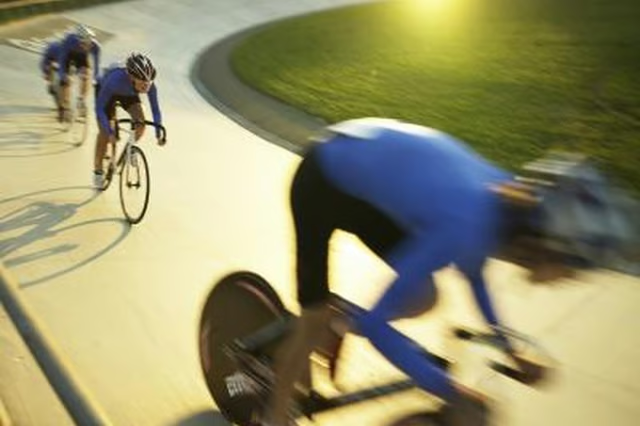
Velodrome cycling is an intense sport that requires power, speed and skill. Velodrome tracks vary from 250 to 450 meters in length, and race distances range from 500-meter (0.31-mile) time trials to 3,000-meter (1.9-mile) endurance events. These aspects, coupled with minimalist track bikes that lack gears or brakes, mean that training for velodrome cycling is not like training for traditional road bike races. If you want to squash your competition in track racing, you'll need to develop raw power and speed.
Step 1
Perform sprint interval workouts. Do four to eight seated hill sprints for 20 to 40 seconds, allowing a five-minute recovery between each. Longer sprint intervals on flats will make you fierce at attacks. Complete three-minute maximal effort sprints with a one-minute recovery between. Repeat long intervals three to six times. Practice sprinting race tactics with your teammates by simulating track events. This is a great way to figure out where your deficiencies are. If you struggle with break-aways, work on starts and accelerations. If your legs burn out fast, work on increasing your lactic acid threshold with longer sprint intervals.
Step 2
Train your upper and lower body with resistance exercises. Use a variety of resistance training techniques to develop fast-twitch muscle fibers that will build your explosive strength. Don't be afraid to use heavy weights and low reps when performing lower body exercises such as squats, deadlifts, hamstring curls and leg extensions. Developing your back, shoulder, arm and core strength will also improve your speed. Perform resistance exercises as high-intensity intervals or circuits. A 1989 study in the "Canadian Journal of Sports Sciences" found that high-velocity circuit resistance training helped athletes improve recovery times, increase stroke volume, raise VO2 max and reduce responding heart rates.
Step 3
Supplement your speed work and resistance training with distance rides and cross training exercises such as swimming. For track events, your long distance rides don't need to be more than 60 to 90 minutes. However, distance rides will increase your cardiovascular and muscular endurance and help you shed excess body fat that could otherwise slow you down. Cross training with other activities will develop strength in areas cycling doesn't and give your mind and body a break from the bike.
