
If you're considering careers in healthcare, ultrasound might stand out as an unusually good option. It only takes two years of training, the pay is good, there are lots of jobs, and sources including U.S. News regularly rate it as one of the best healthcare jobs available. Still, nothing in life is perfect and even sonography has its downside. It's important to know both the pros and cons before you make your decision.
Musculoskeletal Injuries
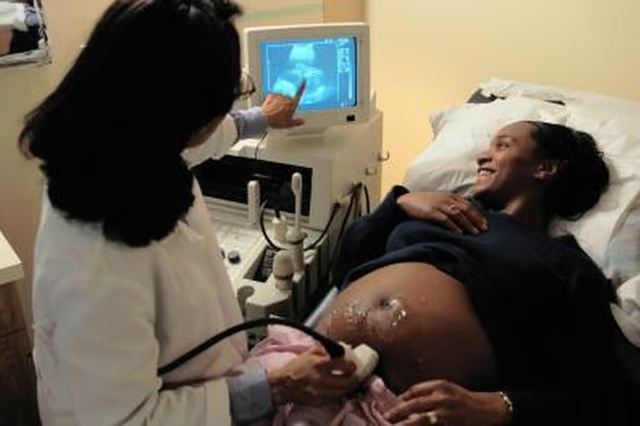
Over the course of your career as an ultrasound technologist, you'll spend a lot of time bent over a patient. That's why neck and back problems are a common occurrence in veteran sonographers, who have been doing the job for years. Several common procedures call for you to press the ultrasound machine's wand, or transducer, firmly against the patient's body while stretched out at an awkward angle. This can lead to bursitis, tendonitis, pinched nerves and a variety of other repetitive strain injuries. The healthcare industry and the Occupational Safety and Health Administration are investigating ways to reduce the risk, but change will take time.
Physical Demands
Aside from the long-term risk of repetitive injuries, sonography can be physically demanding on a day-to-day basis. You'll spend much of your shift on your feet, and in some workplaces you'll move your ultrasound machine regularly from location to location. If your patients are elderly or mobility-impaired, you might need to move them or help them move onto a gurney or examination table. Sometimes you'll also have to move them or help them move into a specific position, so you can create the image the doctor ordered. It can add up to a difficult, fatiguing day.
Direct Contact
The healthcare industry includes some professionals, including lab techs and pathologists, who seldom see a patient directly. Sonography isn't one of those, and you'll be in direct contact with patients every day. That isn't necessarily a bad thing, but some patients will linger in your memory for all the wrong reasons. You'll need to remain professional and keep up your pleasant manner even when patients are disagreeable.
Pace and Schedule
A lot of sonographers work a stable shift, but you can't take that for granted. During the early years, when your co-workers have seniority, you'll probably pull more than your share of evening, weekend and holiday shifts. Some workplaces run 24/7, so swing and graveyard shifts aren't out of the question. You may also be called in unexpectedly in emergency situations. If you're in a high-volume workplace, you may also work under tight time constraints, which can be a big source of stress.
