


The word "flip-flops" should apply to summer footwear, not your heartbeat. Heart arrhythmia occurs when there is a change in your heart rhythm, whether it is too fast or too slow or skips a beat. An arrhythmia may be harmless or a sign of a more serious problem. If you experience fluttering or skipped beats, see your doctor immediately to rule out any underlying heart issues. In the meantime, there are certain foods that can cause heart arrhythmia and should be avoided.
Black Licorice
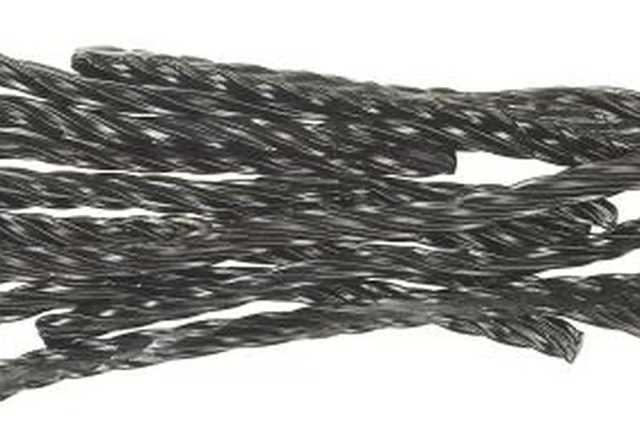
Black licorice can be so bad for your heart rhythm that the Food and Drug Administration issues warnings about it every year before Halloween, when candy consumption increases. According to a report from the FDA, a compound in black licorice called glycyrrhizin lowers your body's potassium levels. This increases your risk of high blood pressure, swelling, heart failure and dangerous arrhythmia. To keep your heartbeat steady, avoid black licorice candy and products with black licorice food additives or flavoring.
Monosodium Glutamate
Monosodium glutamate, or MSG, is found in many processed foods and is also a popular additive in Chinese food. The National Institutes of Health reports that MSG may be the cause of a condition called "Chinese Restaurant Syndrome," which includes palpitations or heart arrhythmia as a symptom. Glutamate receptors are located in various parts of the body including the brain, skin and heart tissue, according to a report in the Feb. 10, 2009 issue of the "International Journal of Cardiology." The glutamate in MSG is an excitotoxin, a neurotransmitter that can cause rapid firing impulses, affecting the heart's rhythm. Limit your intake of processed foods, and if you love Chinese, request that the cook leaves out the MSG.
Aspartame
Aspartame is an artificial sweetener commonly found in diet soda and other sugar-free foods such as yogurt and gum. Like MSG, aspartame is an excitotoxin and over-consumption of aspartame foods can lead to what H.J. Roberts, M.D., referred to in the 2004 "Texas Heart Institute Journal" as aspartame disease. When aspartame breaks down in the stomach, it converts to epinephrine, a hormone that stimulates the heart muscle and increases heart rate, leading to arrhythmia.
Caffeine
Caffeine is found in coffee, tea, sodas and energy drinks but is also in common foods. Chocolate and chocolate products, or baked goods made with chocolate and coffee, contain caffeine. Not everyone who eats or drinks products with caffeine will experience heart arrhythmia, but if you are susceptible to an irregular heartbeat, the Heart Rhythm Foundation recommends avoiding caffeine.
Alcohol
The National Institute on Alcohol Abuse and Alcoholism explains that alcohol consumption affects the heart's electrical system, causing changes in heart rhythm that lead to arrhythmia. If you suffer from a heart arrhythmia, it is best to avoid alcohol consumption.
